Wisconsin PSC, UW-Madison partner to identify possible nuclear plant sites

By: Joe Schulz
Originally posted in Wisconsin Public Radio.
The state Public Service Commission is partnering with the University of Wisconsin-Madison to identify potential sites for nuclear power plants in Wisconsin.
Gov. Tony Evers made the announcement Tuesday evening during his State of the State address.
“Nuclear energy is the largest source of clean power in our country, and it’s a safe, reliable, carbon-free option to power our homes and businesses,” he said in the speech. “This could be a game changer for our state. I’m glad this work has received bipartisan support.”
Last year, Evers signed a bill that ordered a $2 million study to find potential sites for nuclear power plants. That law requires the study be completed by the beginning of 2027.
According to the PSC, the current biennial state budget provided funding for the study. The agency says the siting study will allow the state to understand how nuclear energy can help meet the growing need for carbon-free electricity.
Nuclear energy accounts for 16 percent of Wisconsin’s energy generation portfolio, according to the most recent Strategic Energy Assessment from the Public Service Commission.
The Point Beach Nuclear Plant in Two Rivers is the state’s only operating nuclear plant. Meanwhile, the owner of a shuttered nuclear plant in Kewaunee County is looking to bring new nuclear power to that site, but it could be a decade-long process.
The PSC said the siting study aims to identify development opportunities for nuclear energy in Wisconsin. The Public Service Commission declined to provide an interview for this story.
The state regulator says the study will look at traditional nuclear power, small modular reactors and advanced technologies, like fusion energy. The agency says the study will identify locations that could host plants and would meet federal regulatory requirements.
Last month, the PSC signed an agreement with UW-Madison’s Department of Nuclear Engineering and Engineering Physics to start working on the study.
UW-Madison is home to one of 31 operating research and test reactors in the United States, according to the U.S. Nuclear Regulatory Commission.
In a statement, PSC chair Summer Strand said the agency was grateful to partner with the university, saying it “embodies the Wisconsin Idea in action.”
“Utilizing the university’s vast nuclear energy expertise and research and tapping into its dynamic stakeholder network will greatly benefit both the study and the state as a whole,” she stated.
Strand added that Wisconsin is “uniquely positioned to become a global leader in nuclear and fusion energy.”
In a statement, Paul Wilson, chair of the Department of Nuclear Engineering and Engineering Physics at UW-Madison, called the partnership with the PSC “a great opportunity” to use the university’s expertise to help address “important questions for the state of Wisconsin.”
He told WPR that the effort will help combine UW-Madison’s nuclear science and technology experts with on-campus experts in science communication and geography. The study will also incorporate expertise from the Oak Ridge National Laboratory in Tennessee and the Pacific Northwest National Laboratory in Washington state.
“It’s certainly important that we have the strength we have in nuclear engineering, so we can understand the technical side of this. But it’s really an interdisciplinary effort to look at many different angles,” Wilson said. “We have this network of folks, both on campus and off campus, who bring these other perspectives to bear.”
In addition to the law directing the siting study, Evers also signed a bill last year creating a nuclear summit board to promote nuclear energy and host a nuclear power summit in Madison.
And last month, the state Assembly passed a bill that would provide tax incentives for companies building nuclear plants in Wisconsin. It had bipartisan support, with an 86-11 vote in the Assembly, but still needs to clear the state Senate before it would head to the governor.
Proponents of nuclear energy argue it would be a carbon-free way to replace coal or natural gas plants as a constant and reliable source of electricity. But opponents argue it’s one of the most expensive forms of energy generation, and far more expensive than wind or solar power.
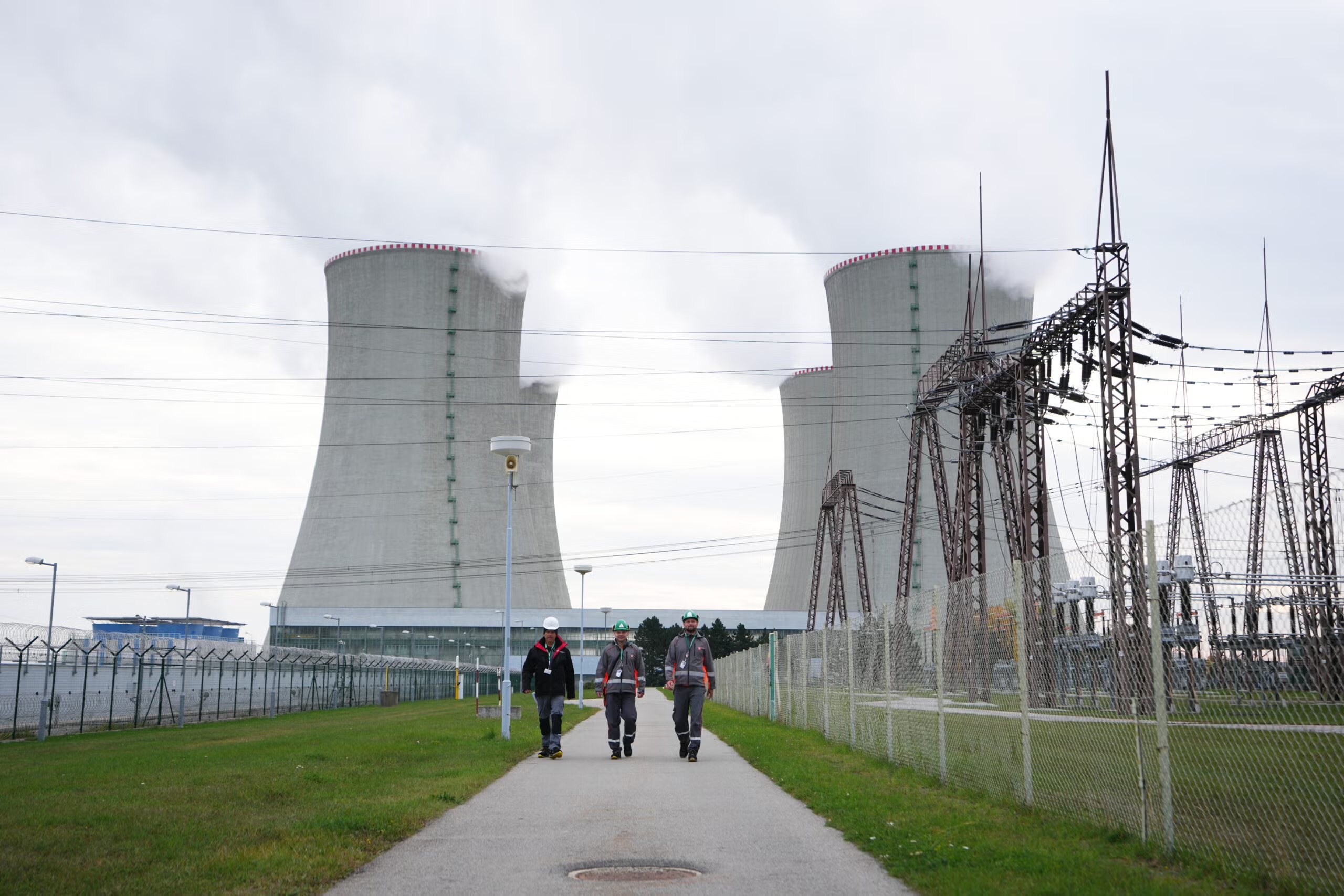
Featured image caption: Workers walk past cooling towers of the Dukovany nuclear power plant in Dukovany, Czech Republic. Photo by: Petr David Josek/AP Photo.