What is fusion?
Fusion is star-powered science with transformative energy potential.
Just as the sun sustains life on our planet, fusion energy could be the finite solution to our infinite energy needs.
The sun’s energy is a result of hydrogen atoms fusing together. Here on Earth, we can fuel similar reactions with deuterium (D) and tritium (T), which are isotopes of hydrogen. D and T atoms usually repel each other but will collide and fuse in the right conditions: a charged state of matter called plasma (helped by heat).
When D and T nuclei fuse, the reactions releases helium, high-energy neutrons, and a significant amount of energy in the form of heat:

To confine and sustain plasma using magnetic fields, scientists and engineers at UW are testing a variety of confinement shapes and device designs:
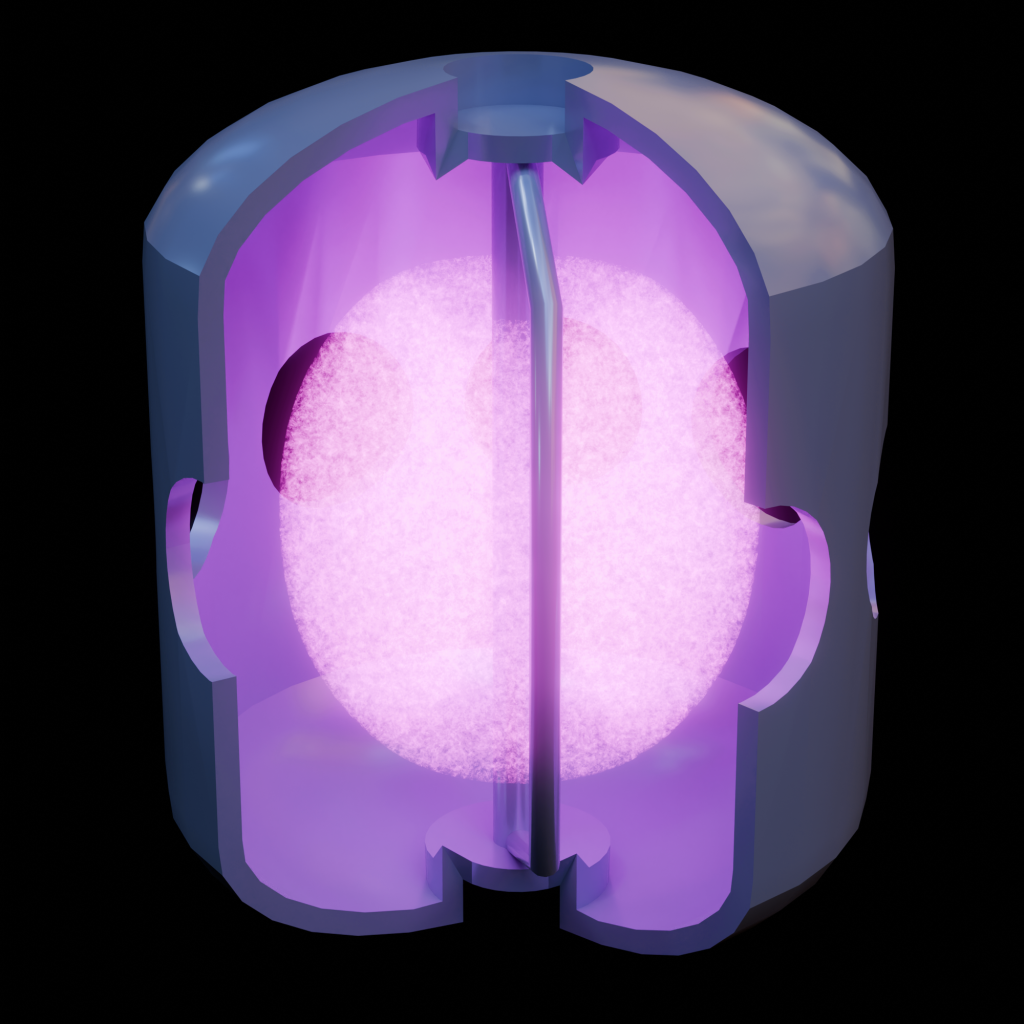
SPHERICAL TOKAMAK
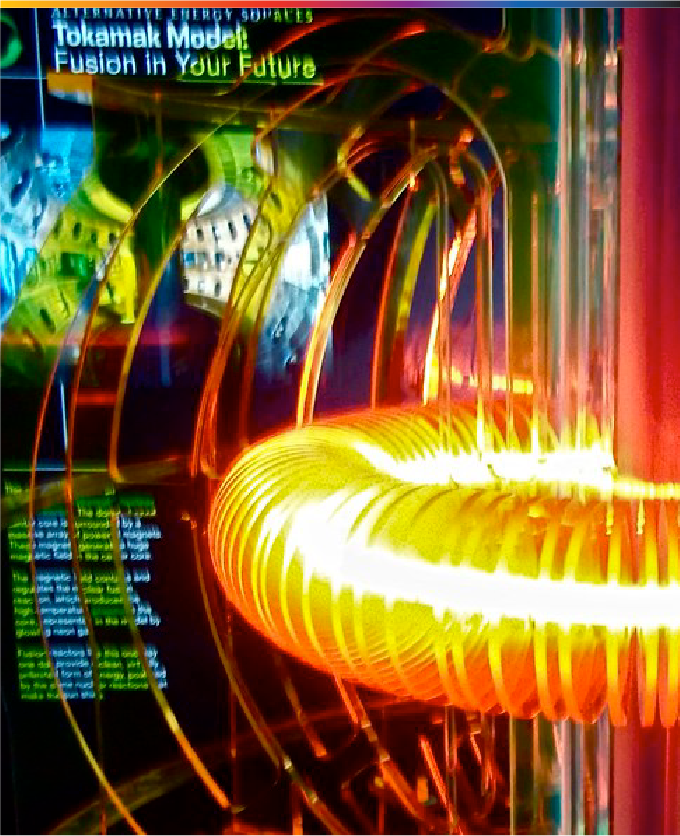
Tokamaks use strong magnetic fields to confine plasma in a toroidal (ring-like) shape. A tokamak that holds plasma in a highly compact spherical shape maximizes energy output while minimizing resource consumption. The Pegasus-III experiment uses this design to study alternative startup methods and possible sustainment techniques.
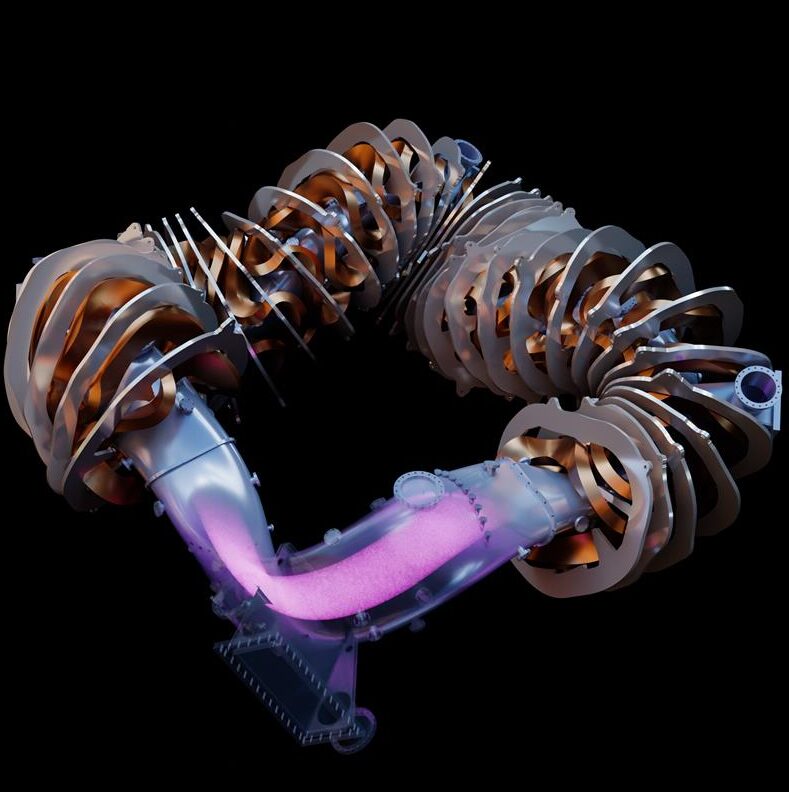
STELLARATOR
Stellarators have a complex, twisted shape designed to naturally stabilize plasma. External magnetic coils create a helical magnetic confinement field. At UW, the Helically Symmetric Experiment (HSX) tests a unique stellarator shape: it’s the only device in the world with a Quasi-Helically Symmetric magnetic field structure.
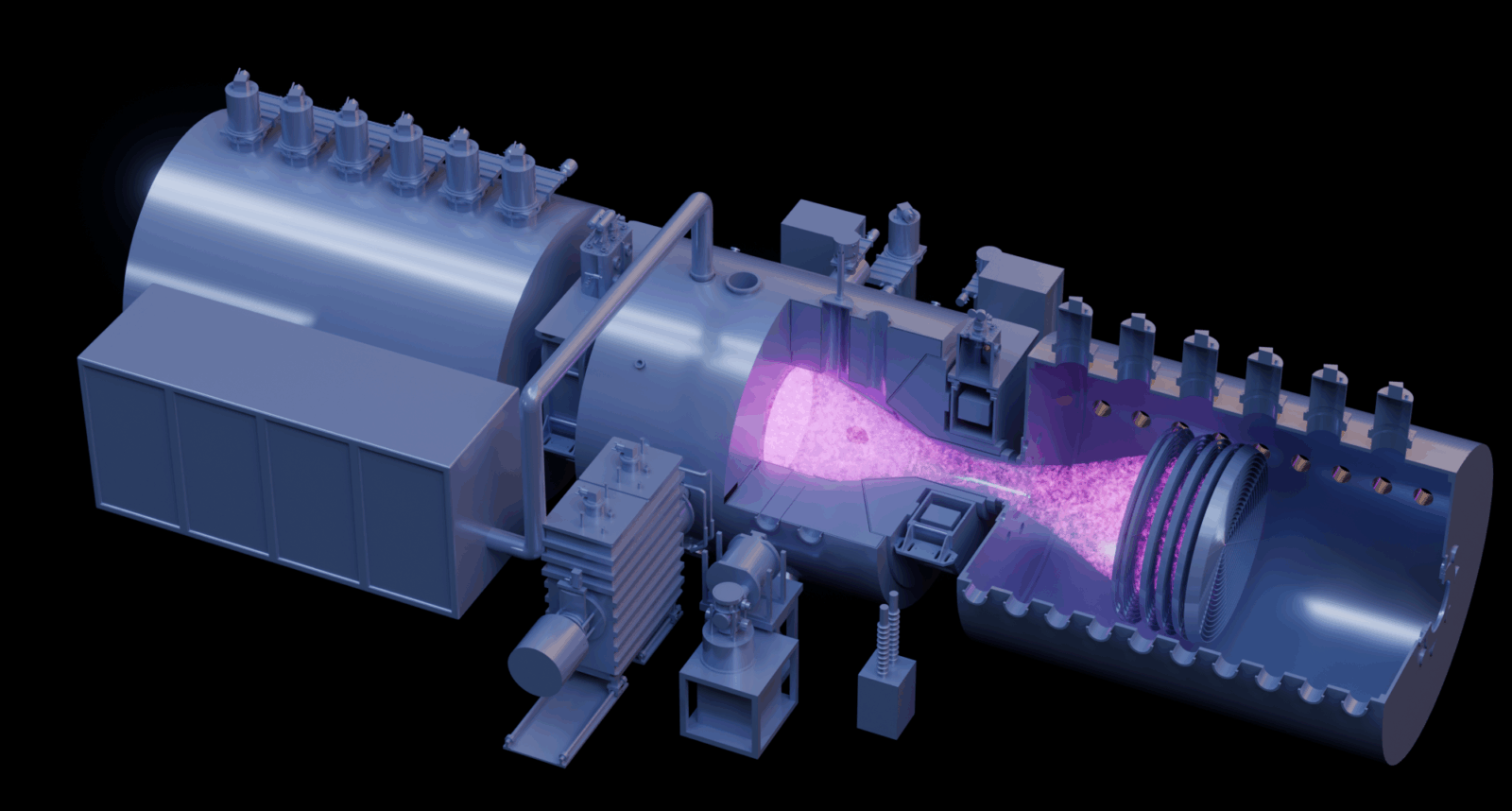
MAGNETIC MIRROR
Magnetic mirrors use two strong magnetic fields at the ends of a cylindrical chamber to reflect and confine plasma along a linear axis. WHAM uses high-powered magnetic mirrors to reflect plasma particles back to the center, enhancing plasma stability and offering a simple, cost-effective design.
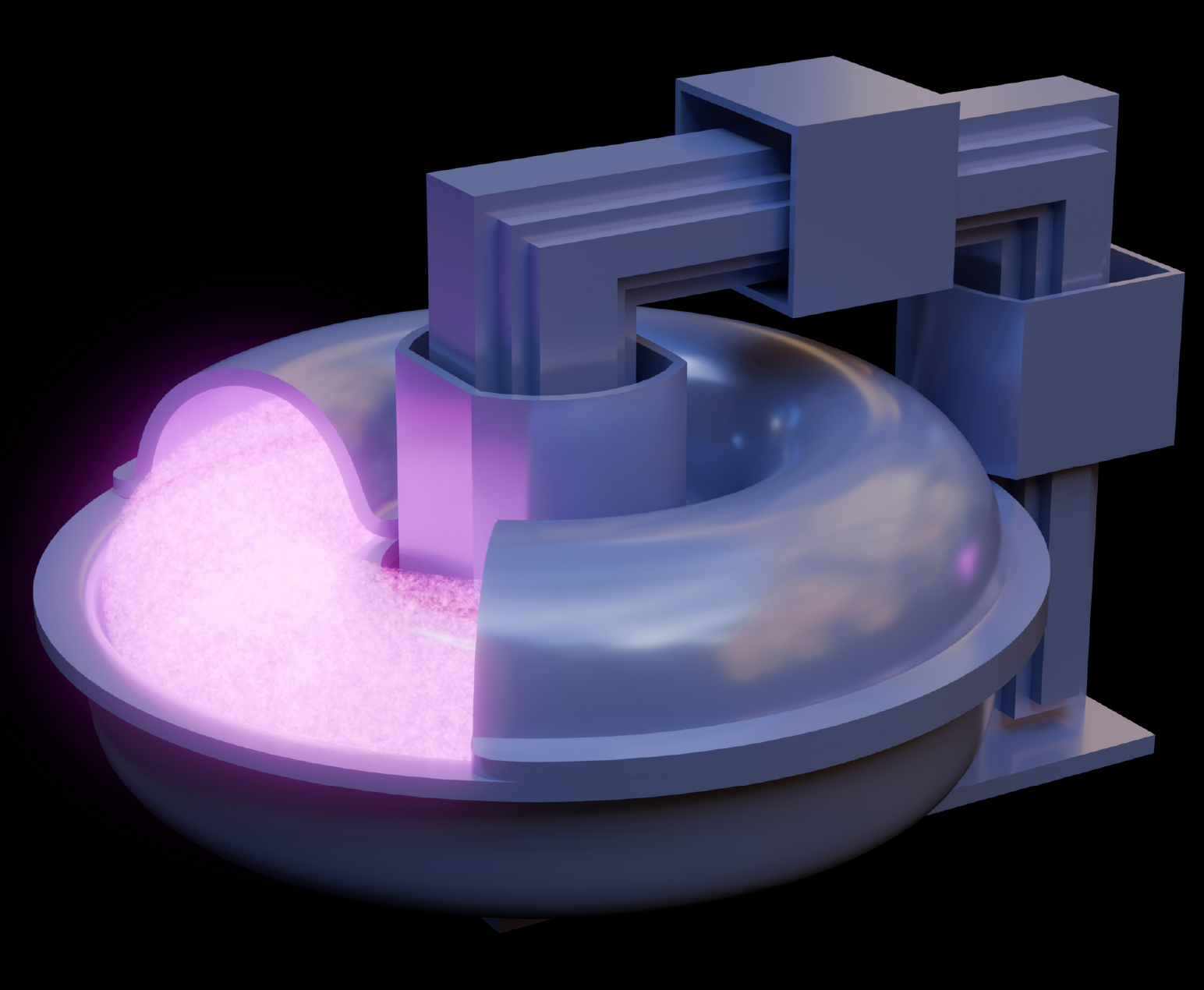
REVERSED FIELD PINCH
Reversed Field Pinch (RFP) devices have a strong toroidal magnetic field that reverses direction at the plasma edge, creating a pinch effect. The Madison Symmetric Torus (MST) operates in either a tokamak or RFP design and is used to study plasma behavior and confinement.


Creating star-like conditions
What it takes to test plasma confinement shapes and designs for fusion energy.
Confining plasma is one of the most significant challenges in fusion energy research because it requires stabilizing an extremely high-temperature, high-pressure environment. Researchers and companies around the world are studying techniques for creating and maintaining the conditions necessary for fusion reactions to occur.

HEAT
Plasma is heated to extremely high temperatures (millions of degrees Celsius) using a variety of techniques. High temperatures provide the energy required for the nuclei to overcome their electrostatic repulsion and collide.

MAGNETIC FIELDS
In stars, plasma is contained and sustained by the force of gravity. On Earth, researchers are working to confine plasma using strong magnetic fields in devices. Strong magnetic fields are used to confine and control the plasma, preventing it from expanding and cooling down.

TECHNOLOGY CHALLENGES
Fusion energy innovators are also developing real-time controls to maintain high performance for a long time, as well as diagnostics to measure confinement strength and why it is hindered. These steps are essential to achieve and sustain fusion energy.